May 28, 2026
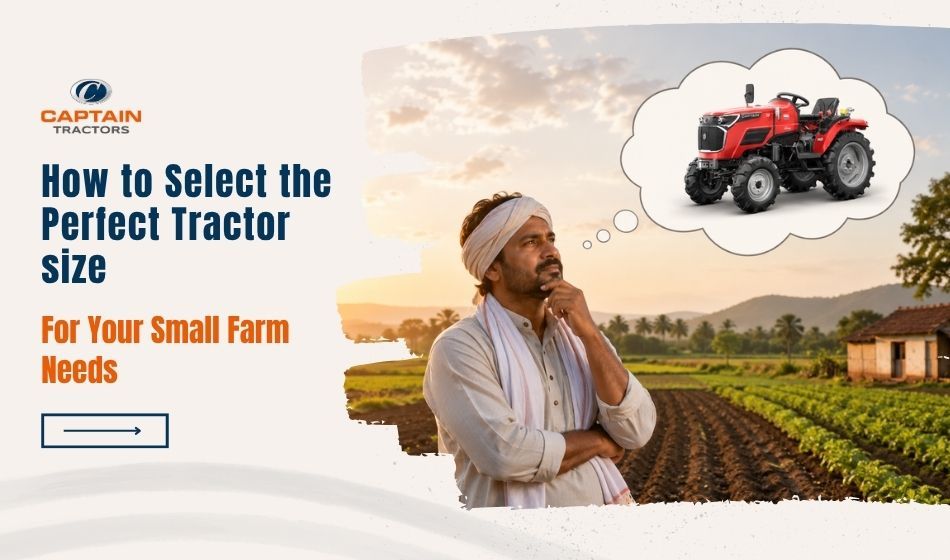
How to Select the Perfect Tractor Size for Your Small Farm Needs
"Most farmers choose a tractor based on land size but the smartest farmers choose based on the actual work their tractor will do."
Choosing the right tractor sounds easy… until you’re actually standing at the dealership trying to decide. Two farms might both be 3 acres, but if one is an orchard and the other grows wheat, they’ll need completely different machines.
Same land area, very different work. And buying the wrong size either too big or too small is an expensive lesson most farmers would rather skip.
So instead of guessing, we will look at a few simple things in this guide, your daily work, your soil, the implements you’ll use, and how your farm might grow in a few years. Once you’re clear on these, the right HP usually becomes obvious.
Why Farm Size Alone Is Not Enough to Choose the Right Tractor
Two farmers can have the same 2-acre plot and need completely different tractors. One grows vegetables in soft, tilled soil and only needs the tractor for light cultivation and spraying. The other is breaking hard, compact ground for the first time, that's a totally different load on the engine.
Land size matters, but it's just one part of the picture. What you grow, how tough your soil is, which implements you’ll use, and how often you’ll run the tractor all of that matters.
If you haven’t finalized your crop yet, it’s smart to think about that first. Your crop choice directly affects the kind of tractor you’ll need. Take a look at which crops make the most sense for small farms in India.
Here’s a simple truth most people realise a bit too late:
- An oversized tractor wastes fuel and money.
- An undersized one struggles, slows you down, and wears out faster.
- Getting the size right means smoother work and better savings in the long run.
Understanding Tractor Horsepower Before You Buy
When someone says “tractor HP,” they’re usually talking about engine power. But here’s the thing, the power that actually runs your implements is PTO (Power Take-Off) horsepower is a 15–20% bit lower than the engine number..
For example, a 25 HP tractor usually gives around 20–22 HP at the PTO (Power Take-Off), which is what actually runs your implements. So don’t just go by the number on paper.
For most small farms, the sweet spot is between 15 HP and 35 HP. Anything below 15 HP is more like a power tiller than a full tractor. Above 35 HP, the machine becomes heavier than your land needs and starts costing more in fuel every single day.
Recommended Tractor HP Range Based on Farm Size
Here’s a general starting point to guide you, not a fixed rule.
Farm Size | Recommended HP Range | Best For | Tractor Type |
|---|---|---|---|
| Up to 1 Acre | 12–18 HP | Kitchen gardens, orchards, light spraying | Mini / Subcompact |
| 1–3 Acres | 18–25 HP | Vegetable farming, light cultivation, transport | Mini / Compact |
| 3–5 Acres | 25–35 HP | Mixed crops, rotavation, ploughing, multi-task | Compact / Small Utility |
| 5–10 Acres | 35–50 HP | Heavy tillage, large gardens, full farm operations | Compact Utility |
The ranges overlap on purpose. For example, a 3-acre vegetable farm might run fine on 20 HP. But if the same land needs heavy work, you may need closer to 30 HP. Use this as a starting point, then choose based on your actual work.
Choose Tractor HP Based on Your Daily Farm Work
A better way to decide the right HP is to look at your daily work, not just your land size. Think about what you’ll do most often and pick an HP range based on that.
15–20 HP is ideal for:
Spraying & Interculture
Light field work, spraying, weeding between rows, small transport jobs. Ideal for orchards and vegetable plots.
20–30 HP is ideal for:
Rotavation & Tillage
Running a rotavator, disc harrow, or mould board plough on moderately firm soil. The sweet spot for most small farms in India.
30–35 HP is ideal for:
Multi-Purpose & Transport
Heavy ploughing, running multiple implements, hauling produce. Good if your farm is diverse or expanding soon.
If your daily tasks fall mostly in the 20–25 HP zone, buying a 35 HP tractor means paying more upfront and burning more fuel every day without getting anything extra out of it. But if you're planning to add a loader or run a chaff cutter down the line, going slightly higher now saves you from upgrading too soon.
Pro tip: If you’re choosing a tractor between two HP ranges and plan to expand in the next 3–5 years, go for the higher one. It’s better to have a little extra power than to replace your tractor too soon.
Other Factors That Actually Matter in Small Farm Tractor Selection
Soil Type & Terrain
Soil type matters a lot. Hard or wet soil needs more power, while sandy soil is easier to work with. If your land is muddy or uneven, grip also becomes important. A 2WD tractor works fine on dry, flat land, but for wet or rough fields, 4WD is a better choice.
Check this guide on 2WD vs 4WD tractors to make the right choice for your farm.
Implements You Plan to Run
Every implement has a minimum HP it needs to run properly. A rotavator generally needs at least 20–25 HP and if you're looking at a reverse-forward rotavator, which is increasingly common on small farms, that HP requirement holds firm. A heavy disc plough on firm ground may need 28–30 HP. A potato digger or seed drill can usually work on less. One simple trick - list the implements you plan to use and check how much HP they need. That will make your tractor selection easy. See the full guide to tractor implements if you're still sorting out what you'll need.
Hydraulic Lifting Capacity
This is easy to miss when comparing models. A tractor might have the right HP but its hydraulic system may not be strong enough to lift a heavy implement. For most small farm tools, a lifting capacity of 500–1,000 kg works well. If you plan to run a front loader, check the hydraulic specs carefully, it matters more than most buyers realise at the time of purchase.
Transmission Type
Gear-driven (manual) transmissions are more fuel-efficient and better for long straight runs, ploughing, sowing. Hydrostatic (automatic) transmissions are much easier to handle for loader work or in orchards where you're constantly changing speed and direction. First-time buyers often find hydrostatic a lot less stressful to operate, especially on smaller plots.
Common Tractor Buying Mistakes Small Farmers Should Avoid
Buying an Oversized Tractor for a Small Farm
Buying a bigger tractor feels safe but on a small farm, it’s often unnecessary. Higher purchase price, heavier fuel consumption, harder to manoeuvre in tight spaces. More power doesn't mean better results on small land.
Ignoring implement compatibility
A lot of farmers buy a tractor first… and only later realise their implements don’t match.
Before buying, always check:
- Whether your plough, rotavator, or sprayer matches the tractor’s HP
- PTO speed compatibility
- Hitch type (pin-on, Euro/Global, skid-steer)
Skipping this step can lead to unnecessary expenses and frustration.
Choosing based on price, not total cost
A cheaper tractor can cost more in the long run if it uses more fuel or spare parts are hard to find especially in rural areas. Always think in terms of total cost over 4–5 years, not just the purchase price.
Not thinking about future use
If you're planning to lease the tractor out to neighbours, take on contract farming, or add new implements in the next couple of years, buy with that in mind. Underbuying today can mean trading in at a loss sooner than you'd like.
Why Compact Tractors Are Usually the Right Call
For farms in the 1–5 acre range, a compact tractor makes practical sense for most farmers. It's not just about the price, there are real day-to-day advantages.
Compact tractors in the 20–35 HP range are lighter, so they cause less soil damage on your beds. They turn in a tighter radius, which makes a real difference when you're working in an orchard or between vegetable rows, the Little Master 120 is a good example of exactly this kind of machine, built specifically for orchard and small farm work. They're also easier on fuel, simpler to store, and one person can comfortably operate and maintain them without needing help. A large tractor can actually get in the way on small land, too heavy, too wide, too much.
Captain Tractors' range including the 200 DI 2WD, 250 DI 2WD, and the 250 DI 4WD was designed specifically for Indian small farm conditions. We have been building tractors for small and marginal farmers since way back in 1998, and that experience shows in how the machines are built. You can browse the full range on the Captain Tractors product page.
The mini tractor guide and the tractor horsepower guide are both worth reading before you finalize anything.
Frequently Asked Questions
What is the best tractor size for a 2-acre farm?
For a 2-acre farm, you don’t need anything too big. An 18–25 HP compact tractor is usually enough for daily work like cultivation, spraying, light ploughing, and transport. If your soil is a bit tough or you plan to use a rotavator often, it’s better to go closer to 25 HP. For lighter work like vegetables or orchards, even 18–20 HP will do the job comfortably.
How much HP tractor do I need for small farm work in India?
Most small farms in India (1–5 acres) do well with a 20–35 HP tractor. The Captain 250 DI series (around 25 HP) is particularly popular for this reason, it covers the core tasks without being oversized for the typical smallholding.
Mini tractor vs regular tractor — which is better for small farms?
If your farm is under 5 acres, a mini or compact tractor usually makes more sense. It’s easier to handle, uses less fuel, and works well in tight spaces like orchards. It also puts less pressure on the soil. Bigger tractors are only really needed if you’re using heavy implements regularly or managing larger land. See the complete guide to small tractors for more detail.
Which tractor is best for small farmers in India?
That depends on your crop and region, but compact tractors in the 20–35 HP range from Indian manufacturers built for local conditions tend to perform best. Captain Tractors has a strong track record specifically for small and marginal farmers, with models covering both 2WD and 4WD options across that HP range.
Final Thoughts
Buying a tractor is a big decision. The right size makes your daily work easier, saves fuel, and lasts longer because it’s not overworked.
Instead of focusing only on HP numbers, think about your actual needs - your crops, soil, and the implements you’ll use. That will help you choose the right tractor much faster.
For most small farms in India, a 20–35 HP compact tractor is enough to handle everyday work without high running or maintenance costs. Getting the right match is far more important than choosing the most powerful machine.
You can explore Captain Tractors’ range of compact tractors and implements, or read the Captain Tractors buying process guide to understand the process step by step.
Loading...