June 15, 2026
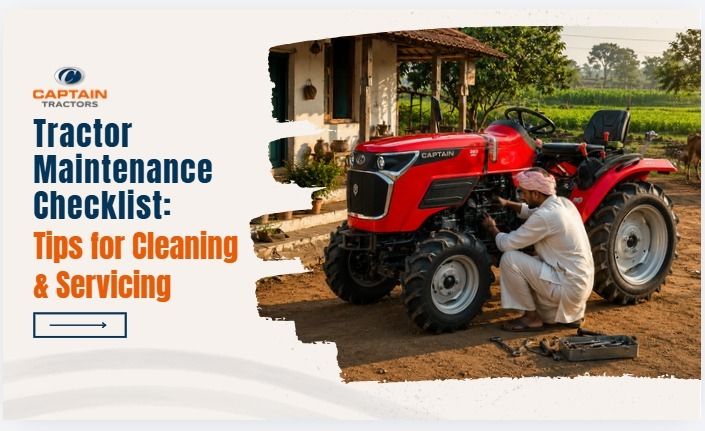
Tractor Maintenance Checklist: Tips for Cleaning & Servicing Your Farm Tractor
Tractor Maintenance Checklist: Tips for Cleaning & Servicing Your Farm Tractor
From preparing fields to pulling implements and transporting loads, a tractor ends up handling some of the toughest work on the farm every single day.
One thing many farmers realise only after a breakdown is this:
If regular servicing is ignored, tractor problems usually appear when the machine is needed the most. And somehow, these problems usually show up right when the tractor is needed most, during sowing, before harvest, or in the middle of urgent field work.
The good part is that most routine tractor maintenance is simple and does not cost much if done on time.
A regular maintenance routine can keep your tractor working reliably for years and help you avoid expensive breakdowns during the season.
To make things easier, this checklist is divided into daily, weekly, monthly, and seasonal maintenance tasks. Each section covers the important checks and servicing work to be done at the right time.
Why Regular Tractor Maintenance Is Important
Most tractor problems do not appear suddenly. They usually start with small maintenance issues that were ignored for weeks or months.
Old engine oil, dirty filters, and skipped greasing are among the most common reasons tractors begin losing performance over time.
When a tractor breaks down during peak season, the impact goes far beyond the repair bill.
- You lose critical farming days
- Emergency repairs cost 3–5x more than routine servicing
- Crop delays reduce yield and profit
- Tractor resale value drops significantly
Real Talk: A breakdown during sowing season can stop farm work for 2–5 days. That is income lost — not just time lost.
On the other hand, a well-maintained tractor usually:
- Lasts 15–20+ years without major engine repairs
- Uses less fuel per hour of work
- Holds a higher resale value when you upgrade
Whether the tractor is used occasionally or works long hours every day, regular servicing still matters.
Here’s the tractor maintenance checklist farmers should follow regularly.
Daily Tractor Maintenance Checklist (Before Every Use)
Time Needed: 10–15 minutes
Spending a few minutes checking the tractor before work starts can prevent bigger problems later in the day.
1. Engine Oil Level
How to check:
- Park on level ground and switch off the engine
- Wait 5 minutes for oil to settle
- Pull out the dipstick, wipe clean, reinsert fully, pull out again
- Oil level should be between MIN and MAX
What to look for:
What You See | What It Means | What To Do |
| Low oil level | Not enough oil | Top up immediately |
| Black or gritty oil | Oil is very old | Schedule oil change soon |
| Milky or foamy oil | Water mixing with oil | Stop use, get it checked |
Warning: Never run your tractor if oil is below the MIN mark. Even 15 minutes of low-oil running can cause permanent engine damage.
2. Radiator Water Level
How to check:
- Check the water reservoir level, do NOT open the radiator cap when the engine is hot
- Level should be near the FULL mark
- Look for any drips or leaks around hose connections
Quick Tip: In peak summer (April–June), check radiator water every single day. Overheating is one of the most common causes of engine damage in Indian fields.
3. Fuel Level and Fuel Quality
What to watch:
- Check the fuel gauge before starting
- Avoid running the tank fully empty, it pulls dirt into the fuel system
- Buy diesel from a trusted pump only
Warning: Water-mixed diesel can damage your fuel pump badly and that is a very expensive repair.
4. Tyre Pressure and Condition
How to check:
- Use a pressure gauge on all four tyres
- Match pressure to the number in your owner's manual
- Take a quick walk around the tractor and inspect the tyres for cuts, cracks, bulges, or uneven wear.
Why it matters:
Problem | Effect |
| Under-inflated tyres | More fuel used, poor grip |
| Uneven tyre pressure | Implement depth goes uneven |
| Flat tyre in the field | Hours of work lost |
Quick Tip: For compact tractors like the Captain Little Master 120 used in orchards and tight spaces, correct tyre pressure is especially important for safe operation on slopes.
5. Air Filter — Visual Check
- Open the air filter cover
- Look at the filter element
- If it looks very dusty or caked with mud, clean it (see weekly section)
Quick Tip: In dusty field conditions, dry soil, harvesting, or land preparation, check the air filter every single day. A clogged air filter silently damages your engine.
6. Check for Leaks and Unusual Sounds
Before starting the tractor, walk around the tractor once and look for anything unusual.
- Look under the tractor for puddles of oil, fuel, or water
- Check hydraulic hose joints for any dripping
- After starting the engine, listen carefully for knocking sounds, unusual vibration, or changes in exhaust noise.
Stop work immediately if you notice:
- Black or white smoke from exhaust
- Sudden power loss
- Engine temperature rising fast
- Unusual knocking sounds
Weekly Tractor Maintenance Checklist
Time Needed: 30–45 minutes | Every 50 hours of use
1. Air Filter — Proper Cleaning
Paper-type filter:
- Remove the filter carefully
- Tap it gently against your palm to loosen dust
- Blow compressed air from inside outward
- Check for tears, replace if torn
- Never wash a paper filter with water
Oil bath filter (older models):
- Remove the oil cup at the bottom
- Empty and wash it with diesel
- Refill with fresh engine oil to the marked level
- Clean the mesh and reassemble
Warning: A clogged air filter can increase your fuel consumption by 10–15% and reduce engine power without any obvious signs. Many farmers ignore this — do not be one of them.
2. Battery Check
How to check:
- Look for white or blue powder on battery terminals (that is corrosion)
- Clean terminals with a wire brush if needed
- Apply petroleum jelly (Vaseline) on terminals to prevent future corrosion
- Check battery water level — top up with plain water only if low
- If tractor is slow to start, your battery needs attention
Quick Tip: Apply Vaseline on battery terminals every month. It is a 2-minute task that adds years to your battery life.
3. Greasing All Joints and Pivot Points
Many farmers skip greasing regularly, even though it is one of the easiest ways to prevent wear.
How to do it:
- Get a grease gun with the right grease
- Find all grease nipples (small metal fittings on joints — check your manual)
- Pump grease until fresh grease just starts to appear at the joint, then stop
Key greasing points:
Location | Why It Matters |
| Front axle pivot | Controls front wheel movement |
| Tie rod ends and drag link | Controls steering |
| Three-point linkage pins | Connects implements to tractor |
| PTO shaft joints | Transfers power to implements |
| Loader or implement attachment points | High wear area |
Warning: Skipping greasing causes joints to wear out fast. Replacing a worn front axle joint costs 10–20x more than a tube of grease. This is the cheapest maintenance you can do.
For tractors running implements like the Rotavator or Disc Plough — grease the PTO shaft and implement joints after every use, not just weekly.
4. Hydraulic Oil Level
How to check:
- Lower the three-point linkage completely
- Check the hydraulic oil level using the sight glass or dipstick
- Top up with the correct hydraulic oil if below the mark
- Also check the hydraulic cylinders and hose connections for small leaks or oil seepage.
Quick Tip: If the hydraulic lift starts moving slowly or unevenly, first inspect the hydraulic oil level before looking for bigger issues. Low hydraulic oil is a common and easy fix.
5. Fuel Filter Bowl — Check and Drain
- Look at the glass bowl on the fuel filter
- If you see water or dirt settled at the bottom — drain it
- Do not wait for the engine to start misfiring before doing this
6. Full Wash-Down After Muddy or Dusty Work
Cleaning is maintenance not just cosmetics.
After muddy field work:
- Rinse the entire undercarriage with a hose
- Pay extra attention to rear axle, wheel hubs, and final drive covers
- Remove packed mud from around the engine and exhaust pipe — mud holds moisture and causes rust
- Clean mud from tyre treads
After dusty harvesting or tillage:
- Blow dust off the radiator fins using compressed air (from engine side outward)
- Clean dust from around the battery and electrical connectors
Warning: Never point high-pressure water directly at the radiator fins. It bends the thin metal and reduces cooling, leading to overheating. Compressed air is much safer for radiator cleaning and helps avoid fin damage.
Quick Tip: Cleaning mud off the tractor after heavy field work helps prevent rust and reduces long-term wear. Mud is the silent enemy of metal.
Monthly Tractor Maintenance Checklist
Time Needed: 1.5–2 hours | Every 200–250 hours of operation
1. Engine Oil Change
When to change:
- Every 200–250 engine hours (usually once a month for regular farm use)
- When the oil looks black and gritty on the dipstick
- Always after the first 50 hours on a new tractor
How to do it:
- Let the engine run for a few minutes first so the oil flows out more easily during draining.
- Place a container under the drain plug at the bottom of the engine
- Open the drain plug and let all old oil flow out completely (10–15 minutes)
- Replace the oil filter — every single time you change oil, no exceptions
- Close the drain plug, fill with fresh oil to the MAX level
- Start engine, run for 2 minutes, check for drips, check level again
Warning: Do not reuse the old oil filter during an oil change. Dirty filters reduce the benefit of fresh engine oil.
Quick Tip: Most Captain Tractors use SAE 40 or CF-4 grade diesel engine oil. Check your owner's manual for the exact specification.
2. Fuel Filter Replacement
- Close the fuel tap before removing the filter
- Note the flow direction arrow, install the new filter the same way
- Fill the new filter with fresh diesel before fitting (makes starting easier)
- Open the fuel tap and run the engine, check for any air in the system
Quick Tip: If the tractor suddenly feels low on power, the fuel filter is often one of the first things worth checking. If your tractor feels weaker than usual, the fuel filter is the first thing to check.
3. Radiator Coolant Flush and Refill
Every 3–6 months:
- Only when the engine is fully cold, open the drain at the bottom of the radiator
- Let old coolant drain completely
- Flush with clean water, drain again
- Refill with fresh coolant (or clean water with the right coolant mix, check manual)
- Check all hose clips — tighten any that feel loose
Warning: Never open the radiator cap when the engine is hot. Hot coolant under pressure can cause serious burns.
4. Gearbox Oil Level Check
- Find the gearbox oil check plug (refer to your manual)
- Oil should be level with the hole when the plug is removed
- Top up with the correct gearbox oil if low
Quick Tip: You may not need to change gearbox oil often, but checking the level every month is important. Low gearbox oil leads to gear grinding and that is an expensive repair.
5. Brake Check
- Press each brake pedal separately, there should be a small amount of free movement before it grips
- Both left and right brake pedals should feel equal when pressed together
- If one brake feels weaker, get it adjusted immediately
Warning: Unequal brakes cause the tractor to pull sideways when stopping, this is dangerous on slopes and near field edges. Do not delay brake adjustment.
6. Steering Check
- Move the steering wheel left and right, it should respond without excessive looseness
- Listen for knocking sounds while turning, this usually means a worn steering joint
- Check power steering fluid level if your model has power steering
7. Electrical System Check
- Before taking the tractor to the field, make sure the headlights, indicators, and rear lights are working properly.
- Once the tractor starts, the battery indicator should switch off within a few seconds.
- Take a quick look around the wiring near the engine area and see if any wires are loose or damaged.
Quick Tip: During long storage periods, rats sometimes chew electrical wiring around the engine area, especially in sheds and barns, so always inspect the wires before using the tractor again.
Tractor Maintenance Tasks for Different Seasons
Do a full service at the start of every major crop season — before heavy work begins.
Before Kharif Season (June–July) — Pre-Monsoon Checks
What to do:
- Complete full service — oil, all filters, greasing
- Check all electrical connections tightly, moisture and electricity are a dangerous combination
- Check tyre tread condition, muddy monsoon fields need good grip
- Test the hydraulic lift, it gets very heavy use during sowing
- Make sure the exhaust pipe is clear — a blocked exhaust reduces engine power
Quick Tip: If you are using implements like the Potato Planter, Seed Drill, or Fertilizer Broadcaster this season, grease all implement linkages and check PTO shaft joints before you start.
Before Rabi Season (October–November) — Pre-Winter Checks
What to do:
- Check diesel for any water contamination — condensation increases in cooler months
- Test the battery — cold temperatures reduce battery power significantly
- Check all engine belts for cracks or wear
- Grease all pivot points thoroughly before heavy tillage work
Quick Tip: For heavy Rabi land preparation using the Mould Board Plough, Chisel Ridger, or Disc Harrow — check your gearbox and rear axle oil levels before the season begins.
For guidance on which implements work best with your tractor's HP, read: Tractor Horsepower Guide: Find the Best Fit for Your Farm Work
Before Zaid Season (March–April) — Pre-Summer Checks
What to do:
- Flush and refill the radiator coolant — summer heat is the biggest enemy
- Clean radiator fins completely — a blocked radiator overheats fast at 40°C+
- Inspect all belts — heat causes rubber to crack and snap
- Check for any fuel leaks — fuel is highly flammable in summer heat
Warning: In peak summer, even a 10-minute engine idle can overheat a tractor with blocked radiator fins. Do not skip this seasonal check.
To understand seasonal crop planning alongside tractor maintenance, read: Types of Crop Seasons in India Explained: Kharif, Rabi, and Zaid
Storing Your Tractor for a Long Period
If your tractor will be unused for more than 30 days:
What To Do | Why |
| Fill fuel tank completely | Prevents rust inside the tank |
| Change engine oil before storing | Old oil contains acids that damage engine internals |
| Remove battery and store separately | Keeps battery healthy longer |
| Inflate tyres fully | Prevents flat spots from forming |
| Cover with a breathable tarp | Protects from dust and moisture without trapping dampness |
| Run engine for 5 minutes every 2 weeks | Keeps engine internals lubricated |
Tractor Cleaning Guide: The Right Way to Clean Your Farm Tractor
Cleaning your tractor properly is a maintenance activity not just making it look good.
What You Need
- Water hose or pressure washer (low to medium pressure only)
- Stiff brush for undercarriage
- Compressed air for engine bay and radiator
- Clean cloths
- Diesel for stubborn grease spots
Step-by-Step Cleaning Process
Step 1: Never start washing immediately after field work. Give the engine enough time to cool down first. Pouring water on a hot engine can damage components.
Step 2: Protect the air intake, exhaust opening, and electrical parts before starting the wash.
Step 3: Wash the tractor from the upper sections first and then move towards the lower parts and wheels.
Step 4: Remove mud buildup from the underside and axle areas using a hard brush, as dirt can hide leaks and rust.
Step 5: Use compressed air to clean radiator fins carefully. Avoid high-pressure water because it may bend the fins.
Step 6: Blow dust out of the engine area with air and clean greasy spots using a lightly diesel-soaked cloth.
Step 7: After washing, start the tractor and let it run for a 10 minutes so moisture dries from important parts.
Step 8: Apply grease again to exposed joints because washing can remove old lubrication.
Warning Signs — When to Stop and Call for Service
Do not ignore these:
Warning Sign | Likely Cause |
| Black smoke from exhaust | Air filter clogged or fuel system issue |
| White or blue smoke from exhaust | Serious engine problem — stop immediately |
| Engine overheating | Low coolant, blocked radiator, or cooling system fault |
| Sudden power loss | Fuel filter or air filter issue |
| Gears grinding or hard to engage | Low gearbox oil or clutch adjustment needed |
| Tractor pulling to one side when braking | Brake imbalance — adjust immediately |
| Excessive steering looseness | Steering joint wear — do not delay |
| Hydraulics slow or not lifting | Low hydraulic oil or filter issue |
Warning: If you see white or blue smoke from the exhaust, stop the tractor immediately. This almost always means a serious engine problem. Continuing to run the engine can turn a manageable repair into a full engine rebuild.
Quick Reference: Complete Maintenance Checklist
Interval | Key Tasks |
| Daily | Engine oil, radiator water, fuel level, tyre pressure, air filter check, leak and sound check |
| Weekly | Air filter clean, battery check, grease all joints, hydraulic oil, fuel filter bowl, full wash-down |
| Monthly | Engine oil change, fuel filter replace, coolant flush, gearbox oil check, brake check, steering check, electrical check |
| Pre-Kharif | Full service, tighten all electrical, tyre tread, hydraulic lift test |
| Pre-Rabi | Battery test, fuel check, belt inspection, full greasing |
| Pre-Zaid | Coolant flush, radiator cleaning, belt check, fuel leak check |
| Storage | Full fuel, oil change, battery removal, tyre inflation, breathable cover |
Which Captain Tractor Is Easiest to Maintain?
Captain Tractors are designed for Indian farming which means simple service access, widely available spare parts, and straightforward maintenance even for first-time owners.
For small farms and orchards:
- Captain Little Master 120 — compact and simple, ideal for farmers who prefer to do their own servicing
- Captain 200 DI 2WD and 200 DI LS 2WD — most popular for small to medium farms, excellent spare parts availability
For medium farms:
- Captain 250 DI 2WD and 250 DI 4WD — solid workhorses with straightforward service intervals
- Captain 223 4WD — excellent for hilly terrain and heavier implements
For heavy-duty operations:
- Captain 280 DX 2WD, Captain 280 4WD, and Captain 283 4WD — built for sustained heavy use, designed for longer service intervals
Want to find the right tractor for your farm size? Read: Compact Tractors: Guide to Finding Your Perfect Farming Partner
For the complete buying process: Captain Tractors Buying Process: Complete Guide for Farmers
7 Reasons Why Captain Tractor Is the Best Choice for Indian Farmers
Final Thought: A Well-Maintained Tractor Is a Profitable Tractor
Here is the simple truth:
You do not maintain a tractor just to avoid breakdowns. You maintain it to protect your income.
A tractor is not just a machine. For most Indian farmers, it is the single biggest investment on the farm — and the one that makes every other operation possible.
Spending 15 minutes on daily checks, 30 minutes on weekly greasing and cleaning, and 2 hours on monthly servicing is a very small cost compared to:
- A seized engine
- A cracked injection pump
- Crop delays from unexpected downtime
Follow this checklist. Make it a habit. And your tractor will give you 15–20 years of reliable service.
Looking for the right tractor or implement for your farm?
Explore the full range of Captain Tractors and Captain Implements built for Indian farming conditions.
Loading...