September 8, 2026
What Is a Tractor Cultivator? Types, Uses and Benefits
Good soil preparation helps crops grow well and keeps the field ready for sowing. After primary tillage, farmers need to loosen the soil, remove weeds, and prepare a good seedbed. A suitable cultivator makes these jobs easier and works well with the crop, soil, and tractor.
Before buying a cultivator, it’s important to know the different types, their uses, and what to check before choosing one. This guide covers these points to help you choose a cultivator suited to your farming needs.
What is a Tractor Cultivator?
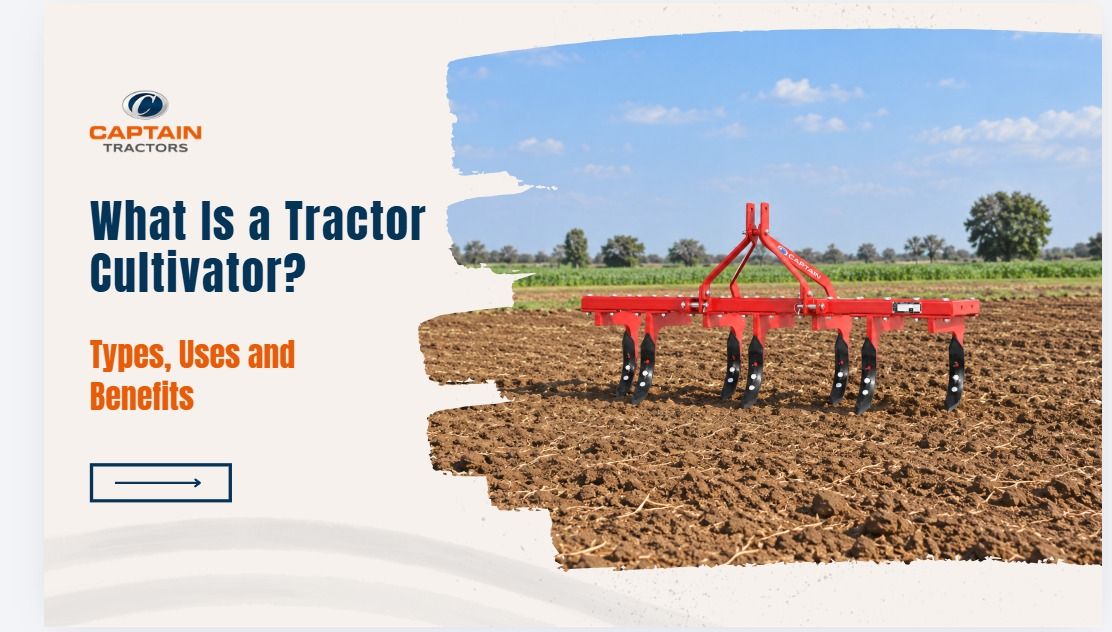
A tractor cultivator is a farm implement attached to a tractor to loosen and stir the soil. Its tines go into the soil, break small clods, remove weeds, and help prepare the field for sowing. Unlike a plough, it does not turn the soil over.
Farmers usually use cultivators after primary tillage. They help create a suitable soil condition for sowing and reduce the time and effort needed for manual field preparation.
How Does a Tractor Cultivator Work?
A cultivator has several tines fixed to a strong frame. When the tractor moves forward, these tines go into the soil and loosen the top layer.
It helps farmers to:
- Break small soil clods
- Loosen hard soil
- Remove weeds
- Let more air into the soil
- Prepare the field for sowing
- Mix crop residue and organic matter into the soil
How deep the tines work and how much land they cover depends on the cultivator, soil condition, tine setup, and tractor power.
Types of Tractor Cultivators
Different cultivator designs suit different soil and farming conditions.
1. Rigid Cultivator
A rigid cultivator has fixed tines attached firmly to the frame. It is suitable for relatively uniform fields where the soil does not contain many large stones.
It is commonly used for:
- Seedbed preparation
- Soil loosening
- Weed control
- Secondary tillage
2. Spring-Loaded Cultivator
Spring-loaded cultivators use flexible tines supported by springs. The spring mechanism helps the tine move when it encounters stones or hard patches.
This makes them useful for uneven or stony fields where fixed tines could experience higher stress.
3. Duck-Foot Cultivator
A duck-foot cultivator uses broad, sweep-shaped blades. These blades cover a wider area and cut weeds below the soil surface.
It is particularly useful for shallow cultivation and mechanical weed control.
4. Offset Cultivator
An offset cultivator has an arrangement designed to work slightly away from the tractor's central line. This design helps in situations where field layout or crop conditions require an offset working position.
5. Row Crop Cultivator
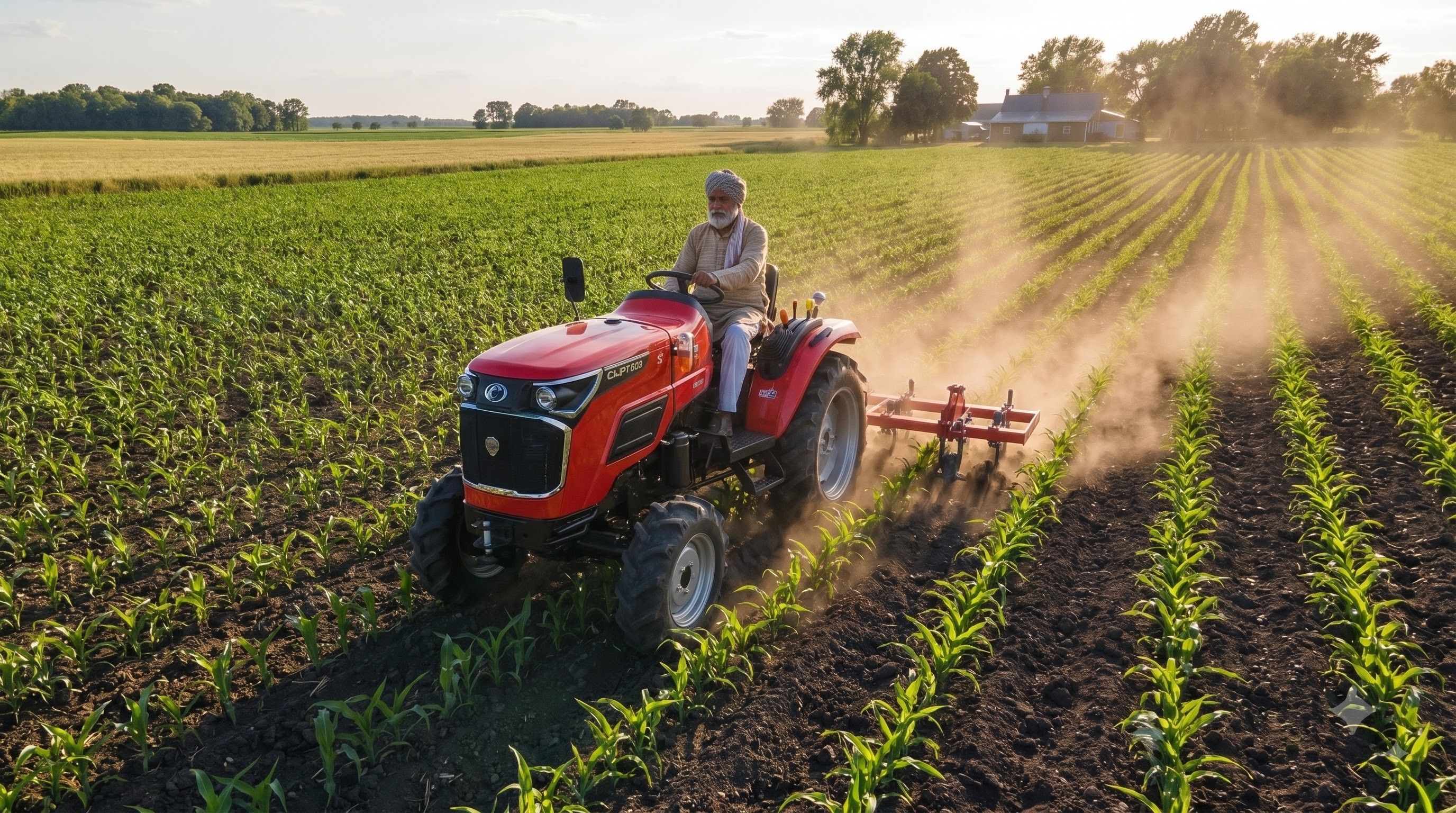
Row crop cultivators are designed to work between crop rows. Their configuration helps control weeds while reducing disturbance close to the crop plants.
The correct row spacing and implement adjustment are important for safe operation.
How Captain Tractors Build Cultivators
At Captain Tractors, we know a cultivator needs to handle regular field work and different soil conditions. We have been manufacturing tractors and farm implements in Gujarat since 1994. Our experience helps us build implements with the needs of Indian farmers in mind.
Our tractor cultivator comes with a strong frame and removable tines. If a tine gets worn or damaged, you can replace it without replacing the complete cultivator. It is designed to work across different soil conditions and pairs well with our mini and compact tractors.
We also supply our tractors and implements to farmers in markets outside India. For us, a good cultivator is not only about the number of tines. It should be strong, easy to maintain, and suitable for regular farm use.
What Is a Tractor Cultivator Used For?
A cultivator has several applications during field preparation and crop management.
Seedbed Preparation
Cultivation breaks smaller soil clods and loosens the upper soil layer. This helps create a more suitable seedbed for sowing.
Weed Control
Cultivator tines disturb weeds mechanically and help uproot them. This reduces competition for water, nutrients, sunlight, and growing space.
Soil Loosening
Repeated field operations can create compacted areas in the upper soil layer. Cultivation helps loosen the soil and improve its physical condition.
Soil Aeration
Loosening the soil creates more space for air and water movement around plant roots.
Incorporating Organic Matter
Depending on the implement and operating conditions, cultivation helps mix crop residues or organic material into the upper soil layer.
Benefits of Using a Tractor Cultivator
Saves Time and Labour A tractor-mounted cultivator covers more field area in less time than manual cultivation. This reduces the effort required for routine soil preparation and weed control.
Helps Control Weeds Mechanical cultivation cuts or uproots weeds, helping farmers manage unwanted vegetation during suitable stages of crop growth.
Improves Soil Preparation A properly adjusted cultivator breaks clods and loosens the soil to create better conditions for subsequent sowing operations.
Covers Large Fields Efficiently The working width of the implement allows farmers to cover larger areas with fewer passes compared with manual methods.
Works With Different Tractor Sizes Cultivators are available in different working widths and tine configurations. This allows farmers to select an implement based on their tractor's available power and their field requirements.
How to Choose the Right Tractor Cultivator
Don't select a cultivator based only on its price or number of tines. Consider how and where you plan to use it.
1. Consider Your Soil Type
Hard, loose, sandy, clayey, and stony soils create different operating conditions. A spring-loaded design is useful where stones or uneven soil are common, while rigid tines suit more uniform fields.
2. Check Tractor HP
The tractor should have enough power to pull the selected cultivator at the required working depth and speed.
The required HP depends on factors such as:
- Number of tines
- Working width
- Working depth
- Soil hardness
- Field condition
Compact tractor models in the 20–28 HP range, such as those in Captain Tractors' 200 DI and 250 DI series, are commonly matched with mid-sized cultivators for this kind of secondary tillage. Always check the implement manufacturer's recommended tractor range before purchase.
3. Select the Right Working Width
A wider cultivator covers more area per pass, but it also requires suitable tractor power and field conditions.
For smaller fields and compact tractors, a narrower implement could offer easier handling and better maneuverability.
4. Consider the Number and Spacing of Tines
Tine spacing affects how the soil is disturbed and how effectively weeds are controlled. Select the configuration according to your crop, soil, and cultivation requirement.
5. Check the Required Working Depth
Not every cultivation operation needs deep soil disturbance. Choose an implement and setting suited to the depth required for your farming operation.
Tractor Cultivator vs Plough vs Rotavator
These implements perform different jobs, so they should not be treated as interchangeable.
Implement | Main Purpose | Typical Operation |
| Plough | Primary soil breaking | Deeper soil preparation |
| Cultivator | Secondary tillage and weed control | Loosens and stirs soil |
| Rotavator | Fine soil preparation | Cuts and mixes soil with rotating blades |
A plough is generally used for initial soil breaking. A cultivator is used for secondary tillage and weed management. A rotavator uses rotating blades to produce finer soil tilth and mix soil and residues. If you want a closer look at how each of these works, Captain Tractors' guides on mould board ploughs and rotavators cover them in more detail.
Cultivator or Rotavator: Which One Should You Use?
The choice depends on the job.
Choose a cultivator when you need to:
- Loosen the soil
- Control weeds
- Prepare the field after primary tillage
- Perform shallow cultivation
- Cover a larger area with a simple tillage operation
Choose a rotavator when you need to:
- Produce finer soil tilth
- Mix crop residues into the soil
- Prepare a fine seedbed
- Break and mix soil using powered rotating blades
In some farming operations, both implements have a place in the soil preparation process.
Frequently Asked Questions
What is a tractor cultivator used for? A tractor cultivator is mainly used for secondary tillage, soil loosening, weed control, seedbed preparation, and other field cultivation operations.
Which cultivator is best for hard soil? The suitable type depends on how hard the soil is, the field condition, and the required working depth. A cultivator designed for heavier soil conditions should be matched with a tractor that has sufficient power.
How many tines should a cultivator have? There is no single ideal number. The required tine count depends on the cultivator's working width, tractor HP, soil condition, crop, and desired spacing.
What tractor HP is required for a cultivator? The HP requirement varies with implement size, working width, depth, soil hardness, and tine configuration. Always follow the manufacturer's recommended tractor range.
Is a cultivator the same as a rotavator? No. A cultivator uses tines or shovels to loosen and stir soil, while a rotavator uses rotating blades powered through the tractor's PTO to cut and mix the soil.
Final Takeaway
A tractor cultivator is a practical implement for secondary tillage, weed control, soil loosening, and seedbed preparation. The right choice depends on your soil, crop, field size, working depth, and tractor capacity.
Before buying, focus on cultivator type, tine configuration, working width, operating depth, and tractor HP. Matching the implement to your actual field conditions helps you get better performance and avoid unnecessary strain on the tractor. Captain Tractors' three decades of building implements for Indian field conditions go into every cultivator it manufactures, which is worth factoring in alongside the technical specs when you're comparing options.
Loading...