February 28, 2026
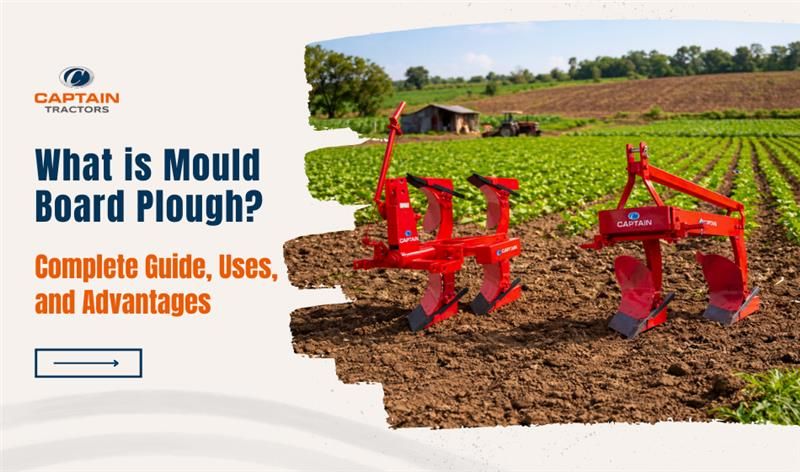
What is Mould Board Plough? Complete Guide, Uses, and Advantages
A mould board plough is a vital tractor implement in modern farming. Farmers rely on this powerful equipment in order to prepare their land for planting. This implements use for removing the soil’s top layer and providing new nutrients onto the soil surface, while covering up crops residues and weeds. So whether you have a small farm or managing large agricultural land, knowing mould board plough helps you make better decisions about your farming equipment.
This comprehensive guide offers everything necessary for understanding MB ploughs, from basic working to the availability of different types.
Understanding Mould Board Plough
Mold Board Plough (MB Plough) is a primary tillage implement designed to cut, lift, invert, and bury the soil. This implement gets its name from its curved metal plate that calls mouldboard that turns soil over as the plough moves through a field.
Attaching Mold Board Plough to the tractor penetrates deep into the soil and creates furrows. Also this allows the farmer to break up hard soil, improves aeration and create an ideal seedbed for the next crops.
Main Components of a Tractor Mould Board Plough
Every MB plough consists of several important parts that work together:
- Share: The sharp cutting edge that penetrates the soil first
- Mouldboard: The curved metal plate that turns and inverts the soil slice
- Landside: Provides stability and prevents sideways movement during ploughing
- Frog: The main body that holds all components together
- Beam: Connects the plough to the tractor through the hitch
Types of Mould Board Plough
Farmers can select from different types of mould plough based on their soil conditions and requirements for farming. Captain Tractors offers popular models to meet the needs of various agriculture needs.
1. Standard M B Plough (Mould Board Plough)
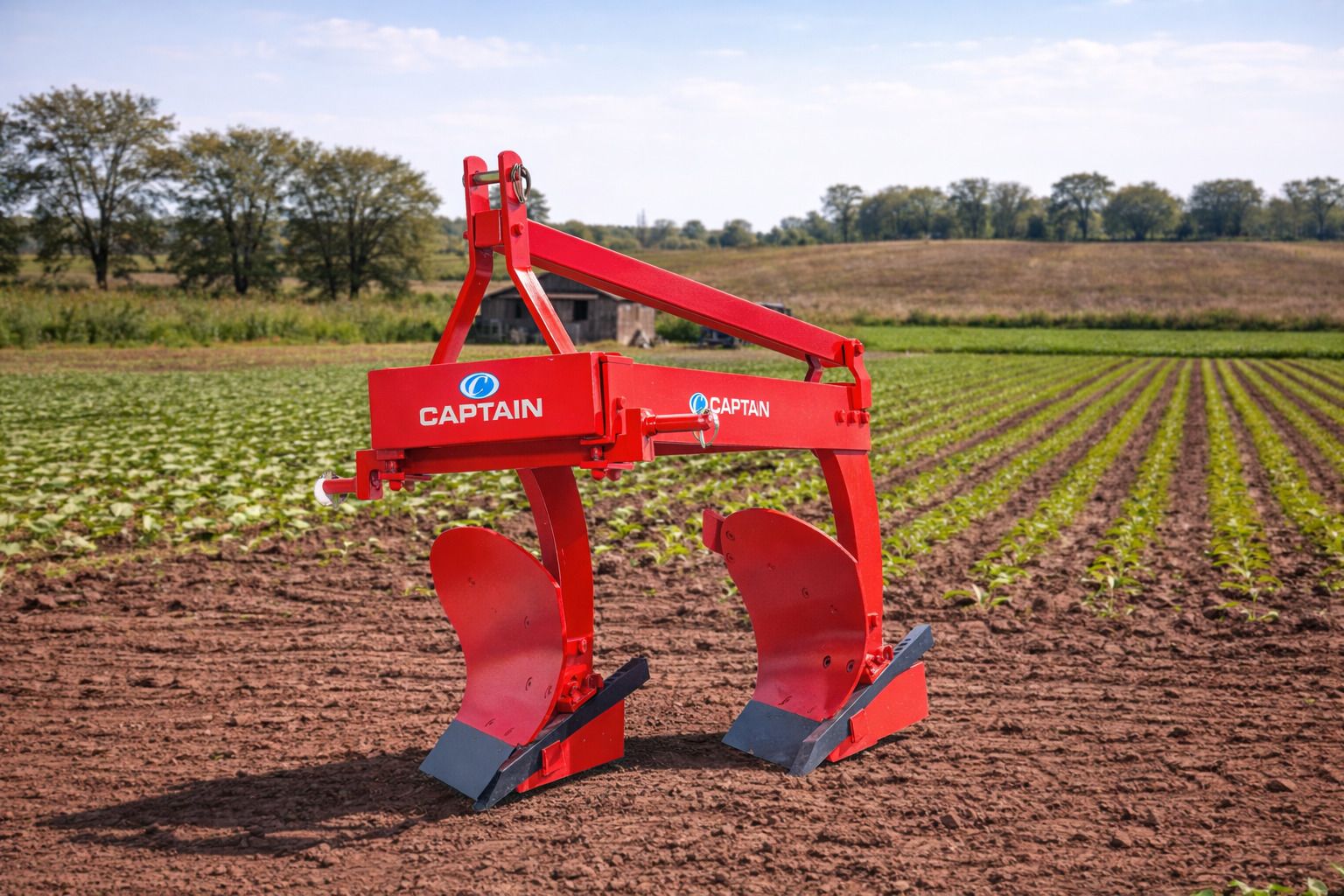
This is the main mould board plough model that is used for soil turning. It cuts the soil, lifts it, and then rolls it around to increase the aeration process, to bury weeds and make seedbeds effectively. This model is ideal for compact tractors, and provides the same performance over different types of soil.
Technical Specifications:
| Specification | Details |
|---|---|
| Working Depth | 152–204 mm |
| Working Width | 400 mm |
| Power Requirement | 12+ HP |
| Weight | Approximately 84 kg |
2. Reversible M B Plough
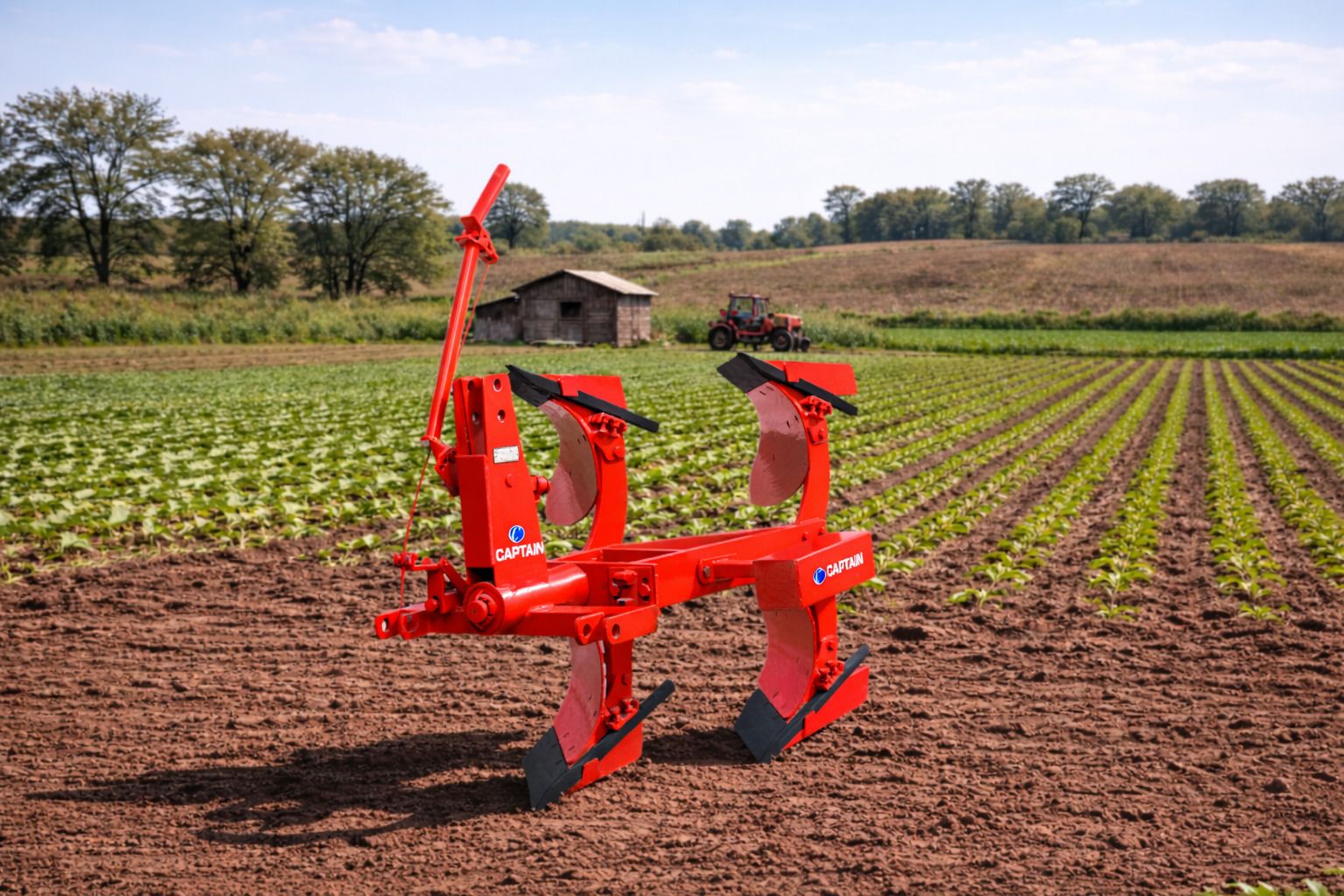
The reversible MB plough allows ploughing in both directions without leaving ridges, improving field efficiency and finish. This sophisticated design decreases the number of passes required and also saves time in field preparation. The reversible mechanism allows farmers to be more efficient particularly in irregularly-shaped fields.
Technical Specifications:
| Specification | Details |
|---|---|
| Working Depth | Two-way ploughing system |
| Working Width | 400 mm |
| Power Requirement | 15+ HP |
| Weight | Approximately 68 kg |
Above both models are made of using premium materials to guarantee durability and long-lasting performance. Selecting the one which best suits your tractor’s specifications and field conditions for ensuring the best results.
How Does a Mould Board Plough Work?
The working mechanism of an MB plough follows a simple but effective process. When the tractor drags the implement across into the fields, the share is cut into the soil to the depth that is set. When the plough is moving forward the curved mouldboard lifts the soil slice and turns it over at an angle.
This turning action buries weeds, crop residue, and organic matter deep into the soil. The land side ensures that the plough is stable and in an even line. It is the result of a field that has been well-turned with soil that has a better structure and better distribution of nutrients.
Primary Uses of Mould Board Plough
The mould board plough serves numerous important functions in agricultural operations:
- Primary Tillage: Breaks up the hard soil following harvest and prepares fields for the planting season.
- Weed Control: Buries the weeds as well as their seeds deep into the soil, thus reducing the problem of weeds in the following crop.
- Residue Management: Turns under organic matter and crop stubble helping in the decomposition process and improving the soil.
- Soil Aeration: Creates spaces in compacted soil, allowing air, water, and roots to penetrate better.
- Pest Management: Exposes soil pests and eggs to predators and sunlight naturally, reducing pest numbers.
- Seedbed Preparation: Makes an open, well-structured loose seedbed that facilitates seeds germination as well as root growth.
Key Advantages of Using MB Plough
Farmers who invest in quality mould board plough enjoy a variety of benefits.
- Complete Soil Inversion: A plough rotates the soil completely, and brings nutrients-rich lower layers of soil to the surface.
- Better Water Retention: Well-plowed soil holds and absorbs water more efficiently, which reduces the need for irrigation.
- Improved Drainage: Breaking down layers of hard pan allows for excessive water to run to prevent the waterlogging.
- Increased Crop Yield: Improved soil structure and availability of nutrients result in healthier plants and greater yields.
- Cost-Effective Operation: A single pass using an MB plough is able to complete a variety of tasks for soil preparation, thereby saving both time as well as fuel.
- Long Service Life: Built of robust materials, these devices will last for a long time when properly maintained.
Factors Affecting MB Plough Price
Several elements influence the cost of a tractor mould board plough:
- Number of Furrows: Ploughs with a higher bottom provide more coverage, but cost more. Single-furrow ploughs are ideal for smaller farms, Multi-furrow models are better suited to larger farms.
- Build Quality: High-quality steel and improved manufacturing techniques increase the cost but also provide greater quality and durability.
- Brand Reputation: Established manufacturers typically charge higher costs for reliability that is proven and a better after-sales support.
- Additional Features: Reversible mechanisms as well as adjustable depths and specific soil-cutting designs increase the price.
Choosing the Right Mould Board Plough
Selecting the appropriate MB plough requires careful consideration of your specific needs:
Match the MB plough size to tractor’s horsepower. An undersized plough can not handle tough soil conditions, while oversized MB plough will strain your tractor. Consider your farm soil type when selecting digger, semi digger or general purpose models.
Take a look at your field's size and shape. Reversible ploughs are best suited for fields that are irregular and turning around can take a long time. For large rectangular fields traditional ploughs that are one-way can be more affordable.
Check reliable sources like Captain Tractors' MB plough section to compare different models and specifications.
Maintenance Tips for Longer Life
Proper care extends your mould board plough's working life significantly:
Make sure to clean plough after using it to avoid any soil accumulation and corrosion. Checking all nuts and bolts frequently, tightening any which have become loose during the operation. Replace or sharpen the share if it gets dull. Sharp edges use less energy and produce more furrows.
Apply grease to moving parts according to the guidelines of the manufacturer. Put the implement in an enclosed container when it is not in use to safeguard it from damage caused by weather. You should examine the whole equipment and change worn parts to avoid failures at critical seasons of farming.
Integration with Other Farm Implements
The mould board plough works as part of a complete farming system. After the initial tillage, using the MB plough, the farmers usually utilize tillage tools for secondary tillage to improve the seedbed. This combination approach creates optimal conditions for planting. Many farmers who are preparing for Rabi harvest season depend in large part on the MB plough to prepare the fields following the monsoon.
The right tractor and high-quality equipment ensures an efficient field preparation. The plough does the heavy task of breaking soil, as harrows and cultivators finish the process of preparation.
Conclusion
A mould board plough is an essential tool to ensure effective control of soils in today's agricultural practices. Understanding the different types of mould board plough and their uses and benefits help farmers make informed decisions regarding their equipment. It doesn't matter whether you are looking for a simple single-furrow model or an advance reversible system choosing the right MB plough for the kind of soil and the dimensions of your field as well as the tractor's capacity ensures higher yields on your crop and better soil health. The maintenance and operation that is regularly scheduled can increase the value of your investment as well as contribute to the sustainability of your agriculture practices. Visit Captain Tractors for top-quality agricultural tractor implements to meet your specific needs in the field of agriculture.
FAQs
Q. What is the main function of a mould board plough?
Mold board plough is used for primary tillage through cutting, lifting and inverting the soil. It removes layers of hard soil, burying crops and weeds, improves aeration, and prepares the area for the planting.
Q. Which type of mould board plough is best for hard soil?
The digger plough works best for hard, dry soils. It features a steep mouldboard angle for deep penetration and aggressive soil breaking. For medium-hard soils, a semi-digger plough is the better choice.
Q. What is the difference between reversible and regular mould board plough?
A reversible plough spits soil both ways and ploughs both directions to save time and fuel. A normal plough throws soil only to one side which requires the tractor to go back empty after every pass.
Q. How deep should a mould board plough cut into the soil?
The ploughing depth for standard ploughing is between 15 and 30 centimeters, based upon the soil type and crop needs. The most common method for farmers is to choose to set the depth between 20 and 25 centimeters for general crops.
Loading...