October 23, 2026
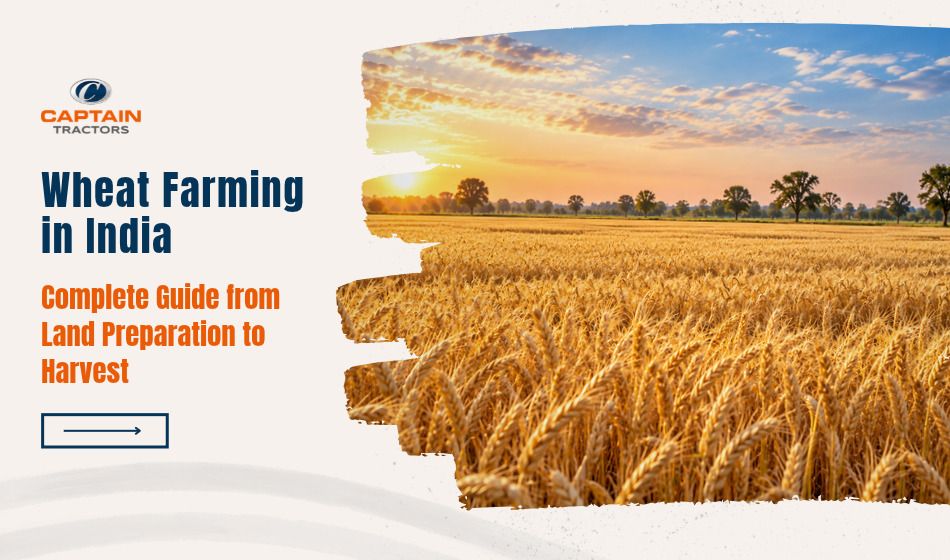
Wheat Farming in India: Complete Guide from Land Preparation to Harvest
Wheat farming starts before sowing. Farmers need to prepare the field, manage crop residue and arrange seeds before the sowing season begins.
Late sowing can expose wheat to high temperatures during grain filling. Poor irrigation and weed control can also affect crop growth.
Wheat is a major rabi crop in India, especially in Punjab, Haryana, Uttar Pradesh and Rajasthan. Farming methods may differ depending on the soil, water supply and field conditions.
Let's look at the main steps of wheat farming, from preparing the land to harvesting the crop.
What Is Wheat Farming?
Wheat farming means growing wheat for grain. In India, farmers mainly grow wheat during the rabi season, after the monsoon crops are harvested.
The main steps include preparing the field, sowing seeds, applying fertilizer, managing irrigation, controlling weeds and harvesting the crop.
The right method depends on your region, soil type, weather and water supply. Local farming advice can help you make the right decisions.
What Conditions Does Wheat Need to Grow Well?
Wheat needs suitable weather, fertile soil and enough water to grow well.
Climate
Wheat grows well in cool weather during its early stages. Warmer weather helps the crop mature, but too much heat during grain filling can affect the grains.
Timely sowing can help reduce this risk.
Soil
Wheat grows well in fertile, well-drained soil that holds enough moisture.
If water collects in the field, it can damage the roots. If the soil dries too quickly, the crop may need more frequent irrigation.
A soil test helps you understand which nutrients your field needs.
Water Availability
Wheat needs water at different stages of growth. The amount depends on the soil, weather and crop condition.
Sandy soil usually dries faster than heavier soil. Proper field levelling also helps distribute irrigation water evenly.
If water is limited, plan irrigation around the crop's important growth stages.
Wheat Farming Step by Step
Let's look at the main farming activities and the equipment that can help with each job.
1. Prepare the Land Before Sowing
Good land preparation helps seeds grow more evenly. Large soil clods and uneven ground can make sowing difficult.
Before sowing, farmers may need to:
- Clear or manage residue from the previous crop.
- Loosen compacted soil.
- Break large soil clods.
- Level the field where needed.
- Prepare a suitable seedbed.
- Check soil moisture.
The amount of tillage needed depends on the condition of your field. Too many tractor passes can waste time and fuel.
A plough or disc harrow can help with primary tillage. A cultivator loosens the soil and breaks clods, while a rotavator can help prepare a finer seedbed where suitable.
You can explore different tractor implements to find equipment for your farming needs.
2. Choose the Right Wheat Variety
Not every wheat variety performs equally well in every region. Your choice should depend on the local climate, soil and sowing time.
Before buying seeds, check:
- Which varieties are recommended for your area.
- The suitable sowing period.
- Water requirements.
- Resistance to common diseases.
- Suitability for your soil conditions.
Choose healthy, certified seeds where available. You can also ask your local agriculture department or agricultural university for advice.
Arrange your seeds before the sowing season to avoid delays.
3. Get the Sowing Time and Method Right
In many parts of northern India, wheat is commonly sown during November. The ideal time depends on the region, variety and previous crop.
Late sowing can expose wheat to higher temperatures during grain filling. Preparing the field early can help you sow on time.
How much seed should you use?
The seed rate depends on the variety, seed size, sowing method and sowing date. Follow the recommended quantity for your region.
Which sowing method should you use?
Farmers commonly use these methods:
- Broadcasting: Seeds are scattered across the field. Spacing and depth may not be uniform.
- Line sowing: Seeds are planted in rows, making spacing easier to manage.
- Seed drill: A tractor-drawn mechanical seed drill places seeds at a more consistent depth and spacing.
- Zero-till sowing: Seeds are planted without conventional ploughing when field conditions and equipment allow it.
A sowing depth of around 5–6 cm is commonly recommended, but local guidance should take priority.
After sowing, focus on irrigation, nutrients and weed control.
Taking Care of the Wheat Crop
Once the crop starts growing, regular checks help you spot problems early. Pay attention to fertilizer, irrigation, weeds and pests.
Fertilizer Management
Applying more fertilizer does not always improve the harvest. The crop needs the right nutrients in the right amounts.
A soil test can help you decide which fertilizers to use. Nitrogen is often applied in split doses, while phosphorus and potassium requirements depend on soil conditions.
Follow local fertilizer recommendations instead of using the same quantity every season without checking your soil.
Irrigation: When Does Wheat Need Water?
Wheat needs water at important stages of growth.
Under typical conditions, the first major irrigation is commonly recommended around 20–25 days after sowing, during the crown root initiation stage.
Further irrigation may be needed during tillering, flowering and grain filling. The schedule depends on soil moisture, rainfall, temperature and crop growth.
For example, sandy soil may dry faster than heavier soil. Check the field before deciding when to irrigate.
Avoid waterlogging, as standing water can damage the roots.
Keep Weeds Under Control
Weeds compete with wheat for water, nutrients, sunlight and space. If they grow unchecked, they can affect crop development.
Farmers can use suitable mechanical or chemical weed control methods, depending on the type of weeds and field conditions.
If you use herbicides, choose a product approved for wheat and follow the label instructions.
A suitable tractor-mounted sprayer can help cover larger fields more efficiently.
Watch for Pests and Diseases
Check your field regularly for changes in plant growth, leaf colour and wheat ears. Early checks can help you identify problems before they spread.
Common issues include:
Problem | Signs to look for |
| Termites | Damage to roots and young plants |
| Aphids | Small insects feeding on plant sap |
| Rust diseases | Rust-coloured spots on leaves |
| Powdery mildew | White powdery growth on plant surfaces |
| Loose smut | Dark or abnormal wheat ears |
Do not spray pesticides or fungicides without identifying the problem first. If you are unsure, ask your local agriculture officer for advice.
Keep a Record During the Season
A simple notebook can help you manage your wheat crop.
Record the sowing date, irrigation, fertilizer use and pest treatments. You can use these notes to plan the next season.
During field visits, check for:
- Uneven crop growth.
- Soil moisture problems.
- Weeds and nutrient deficiencies.
- Signs of pests and diseases.
- Water collecting in low areas.
- Changes that show the crop is nearing maturity.
These checks help you decide when the field needs attention.
Wheat Harvesting and Yield Per Acre
Wheat is generally ready for harvest when the plants turn golden-yellow and the grains become hard.
Harvesting too early can result in poorly developed grains. Waiting too long can increase the risk of grain shattering and weather damage.
Check the crop before deciding when to harvest.
Manual or Mechanical Harvesting?
The best method depends on your field size, labour availability and access to machinery.
Manual harvesting
Farmers may use sickles on smaller plots. This method needs more labour and time but can be useful where machinery is difficult to use.
Mechanical harvesting
Combine harvesters can cover larger areas quickly and handle cutting and threshing in one operation. Farmers may also use suitable reapers or hire harvesting equipment.
If you need a machine for only a few days each year, hiring it may be worth considering.
Threshing and Grain Storage
After harvesting, the grain needs to be separated from the straw where required, cleaned and dried before storage.
Store wheat in a clean, dry place protected from pests. Grain with too much moisture can develop mould and spoil.
A tractor with a suitable trailer can help transport harvested wheat to the threshing area or storage facility.
How Much Wheat Can One Acre Produce?
Wheat yield varies from field to field. It depends on the variety, soil, sowing date, irrigation, weather and crop management.
Check your previous harvest records and compare them with local agricultural trial results. This can help you set a realistic yield target.
How Tractors Help During Wheat Farming
A tractor can help with several jobs during the wheat season, from preparing the field to transporting harvested grain.
Farming operation | Common equipment |
| Land preparation | Plough, disc harrow, cultivator |
| Seedbed preparation | Rotavator, cultivator |
| Sowing | Seed drill |
| Crop protection | Compatible sprayer |
| Harvest support | Suitable reaper attachment |
| Transport | Trailer |
The right tractor depends on the work you need to complete. Before buying, check the power requirements of your implements and make sure they are compatible with the tractor.
How to Choose a Tractor for Wheat Farming
A suitable tractor should match your field conditions, regular farm work and implements.
1. Farm Size
Consider the area you cultivate and the space available for turning. Compact tractors can suit smaller farms and fields with limited turning space.
2. Horsepower
Choose horsepower according to your workload. Check the requirements of your cultivator, rotavator, seed drill and other implements.
A higher-horsepower tractor is not always necessary for lighter farming work.
3. Choosing Between 2WD and 4WD
A 2WD tractor may suit firm, level fields and compatible implements. A 4WD tractor can provide additional traction in wet, uneven or difficult conditions.
Read this guide to choosing the right 2WD vs 4WD tractor to understand the differences.
4. Implement Compatibility
Check whether the tractor can operate the implements you plan to use. Consider power requirements, attachment compatibility and working capacity.
5. Field Conditions
Think about your soil and the conditions in which you normally work. Wet or uneven land may require a different setup from firm, level fields.
6. Transport Requirements
You may also need to move seeds, fertilizer, harvested grain and other materials.
If you regularly use a trailer, include this work when comparing tractor models.
Choose a tractor that meets your farming needs without paying for features you do not require.
How Captain Tractors Supports Wheat Farming
Farmers looking for a small tractor can explore Captain Tractors' compact range, which includes models from 12 HP to 28 HP.
Different models offer different horsepower and drive configurations. Depending on the model and compatible implements, they may suit selected field preparation, sowing, spraying and transport tasks.
Compare the available Captain tractors and discuss your farming requirements with a local dealer before choosing a model.
Which Captain Tractor Should You Consider for Wheat Farming?
The right model depends on your farm size, field conditions and the implements you need.
Captain Little Master 120 – 12 HP, 2WD
A compact option to consider for smaller farms and lighter operations, provided the tractor's specifications match the intended work.
Captain 200 DI – 20 HP
An option for general farm operations that match its specifications.
You can also compare the Captain 200 DI LS 4WD if you need a four-wheel-drive configuration.
Captain 223 – 22 HP, 4WD
This model may be worth considering where additional traction is useful for the field conditions and intended work.
Captain 250 DI – 25 HP
Consider this model for operations that match its power and configuration. Check implement compatibility before purchasing.
Captain 283 – 28 HP, 4WD
A higher-horsepower option for work that requires additional power and traction, depending on the implements and field conditions.
Captain's implement range includes cultivators, rotavators, disc harrows and seed drills. Ask your local dealer about compatible sprayers, trailers and harvesting attachments.
FAQs About Wheat Farming in India
1. How is wheat farming done in India?
Farmers prepare the land, sow suitable seeds, manage irrigation and fertilizer, control weeds and pests, and harvest when the grains mature.
2. Which soil is best for wheat farming?
Wheat grows well in fertile, well-drained soil that holds enough moisture. A soil test helps identify nutrient requirements.
3. When should wheat be sown in India?
In many parts of northern India, wheat is commonly sown during November. The ideal time depends on the region and previous crop.
4. When should wheat be irrigated for the first time?
The first major irrigation is commonly recommended around 20–25 days after sowing under typical conditions. Soil type and weather can affect the timing.
5. Which fertilizer is best for wheat?
The right fertilizer depends on soil fertility and crop needs. Soil testing and local agricultural advice can help determine the correct dose.
6. How much wheat can one acre produce?
Yield depends on the variety, soil, irrigation, sowing time, weather and crop management. Previous harvest records and local trial data can help estimate production.
7. Which tractor is suitable for wheat farming?
Choose a tractor based on farm size, soil conditions, horsepower requirements and implement compatibility.
Final Thoughts: Plan Your Wheat Farming Season
A good wheat crop starts with proper planning. Prepare the field, choose suitable seeds and sow at the recommended time. During the growing season, manage water, nutrients and weeds according to the crop's needs.
The right tractor and implements can also make fieldwork easier. Before choosing a model, consider the jobs you need to complete throughout the year, not just wheat farming.
Visit Captain Tractors to explore the tractor range and connect with a dealer.
Loading...