May 18, 2026
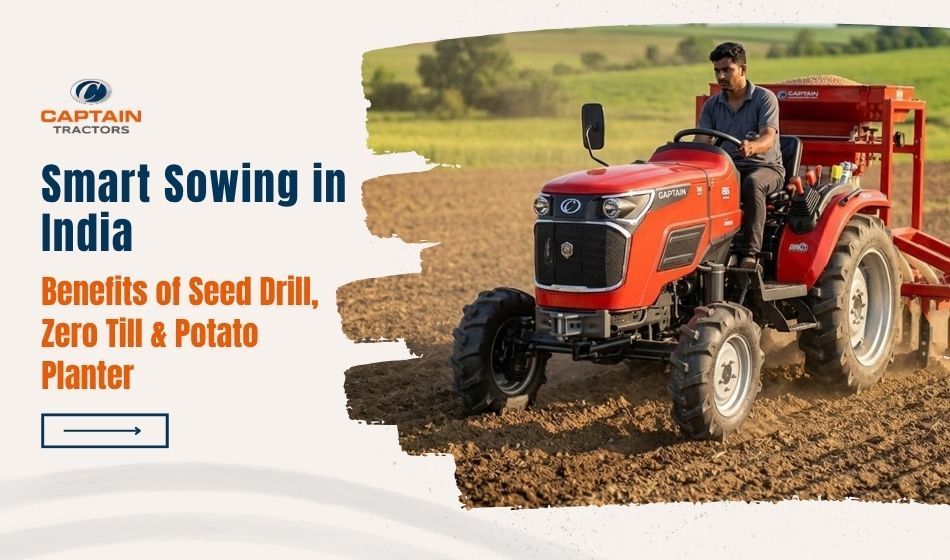
Smart Sowing in India: Benefits of Seed Drill, Zero Till & Potato Planter
If you’re still sowing by hand or depending on hired labour, you already know the issue, it takes a lot of time, costs more money, and finding workers on time is getting difficult.
For generations, this has been the usual way of sowing. More hands, more bags, more rows covered by sundown. But with labour costs rising, crop cycles getting tighter, and input costs climbing every season, that math doesn't hold up the way it used to.
Mechanised sowing solves most of that but only if you're using the right implement for your crop and your soil. A well-chosen seed drill doesn't just save time. It places every seed at the right depth, at the right spacing, with less waste and less guesswork.
This guide covers three implements that are becoming popular on Indian farms: the Mechanical Seed Drill, the Zero Till Seed Drill, and the Potato Planter. It explains what each one does, where it works best, and where it may not be suitable. Because the right tool for your neighbour's field may not be the right tool for yours.
What Is Smart Sowing and Why Should Indian Farmers Care?
Sowing looks simple from the outside. Put seed in soil, wait for rain, watch it grow. But any farmer knows there's more to it than that.
If you put a seed too shallow and birds will get it. If you put seed too deep and half your seeds never germinate. If there is uneven spacing and your plants will fight with each other for light and nutrients before they've even had a chance. And if you lose a few days of soil moisture between two crop cycles, you feel it at harvest.
Broadcasting by hand gets seeds into the ground. That’s all it does, there’s no control over depth, spacing, or proper seed-to-soil contact. You're essentially hoping for the best.
A seed drill changes that. It places each seed at the right depth and spacing, with proper contact with the soil. Farmers who have switched to seed drills report better germination, less seed waste, and more uniform crop growth. And a more even stand almost always means a better harvest.
On top of that, getting labour during sowing season is genuinely difficult right now. Workers are hard to find, and when you do find them, they cost more than they did a few years ago. So anything that reduces that dependence just makes sense.
You can read more about this shift in our blog on why agricultural workers as a share of India's total workforce are steadily declining and what that means for farming going forward.
Mechanical Seed Drill: Precision Sowing at Scale
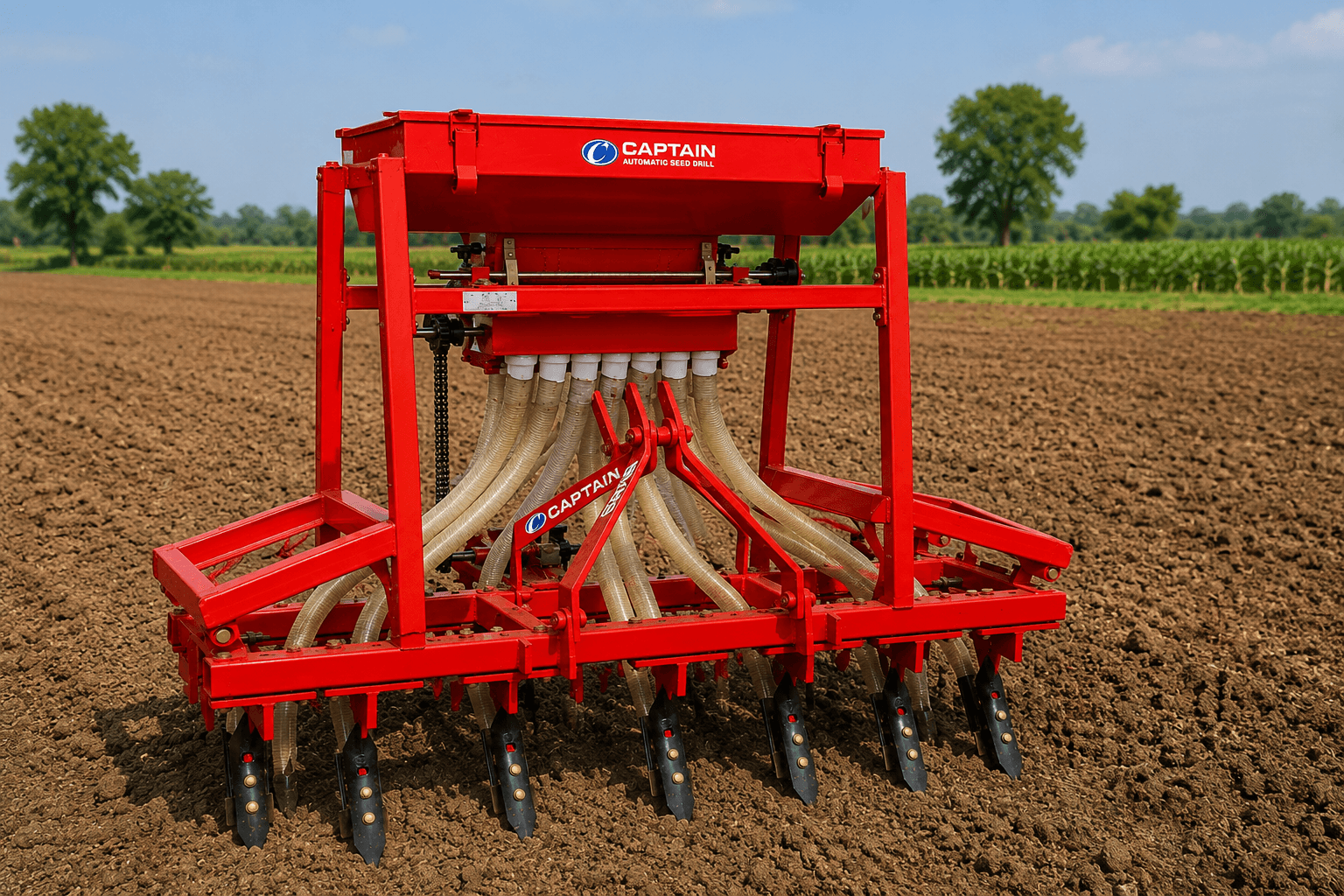
The Mechanical Seed Drill is probably the most widely used sowing implement among tractor owners in India, and for good reason. It’s a straightforward and reliable tool that works across various soil types and crops.
Here’s how it works: you attach the drill to your tractor and drive across the field. As you move, it opens small furrows, drops seeds at the right depth, and covers them with soil. Everything happens in one go, so you get even rows without extra effort. No need for manual work or multiple steps, just uniform rows across the field.
When Should You Use a Mechanical Seed Drill?
For sowing crops like wheat, mustard, groundnut, and soybean on prepared fields, a mechanical seed drill works best. It works best in fields that have already been ploughed and levelled.
The benefits are simple and clear. You use less seed, avoid wastage from broadcasting, reduce labour, and get uniform spacing between plants. This helps each plant grow better, and germination improves because seeds are placed at a consistent depth.
Just keep one thing in mind, this machine performs best on well-prepared soil. If the field isn’t properly tilled, it may not work as effectively. That’s where the next implement becomes useful.
Zero Till Seed Drill: Sow Without Ploughing
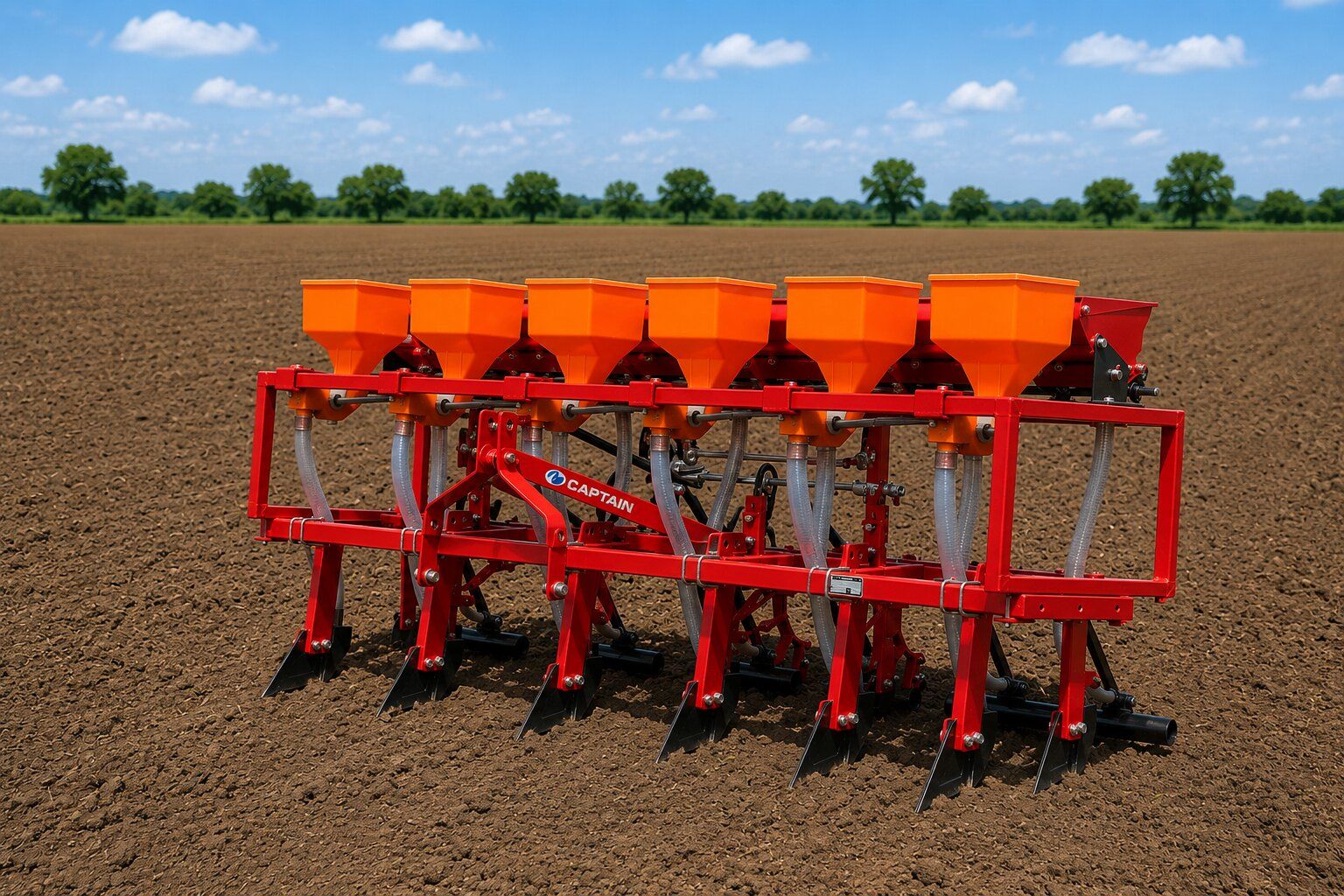
Many farmers find this surprising at first. Zero tillage farming means sowing seeds without ploughing the field. In India, farmers are used to preparing the land before sowing, so this idea feels unusual. But it works and that’s why more farmers are adopting it.
A Zero Till Seed Drill makes this possible. It cuts through the soil and crop residue, places the seed at the right depth, and covers it — all in one go. There’s no need to plough the field beforehand. For example, after harvesting paddy, you can directly sow wheat without disturbing the soil.
When does a Zero Tillage Seed Drill Work Best?
It’s especially helpful after paddy when you need to sow wheat quickly. Farmers in Punjab, Haryana, western UP, and similar regions often face a very short gap between harvesting paddy and sowing wheat. With zero tillage, you can sow 10–15 days earlier, which helps the crop grow in better (cooler) conditions and improves yield.
There are other benefits too. It helps keep moisture in the soil, reduces soil damage, and saves fuel since fewer tractor passes are needed. Over time, it can even improve soil health.
If you grow wheat after paddy and haven’t tried a zero till drill yet, it’s definitely worth considering.
The Rabi crop season guide on our blog covers this in more detail and is worth a read before the next sowing window opens.
Potato Planter: Because Potatoes Are a Different Thing Entirely
Wheat and potato are both field crops but when it comes to sowing, they’re very different.
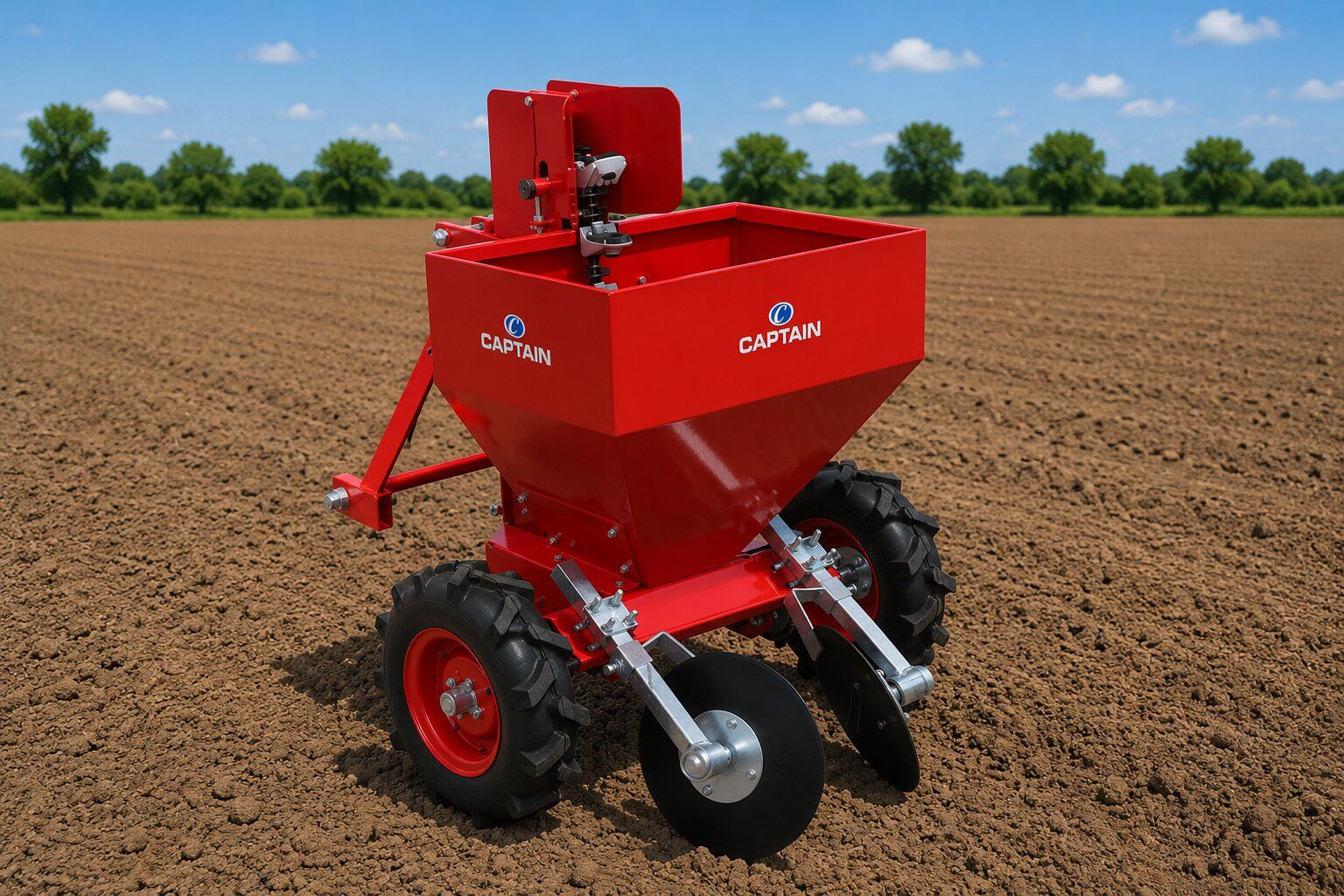
Potato planting isn’t as simple as dropping seeds in the soil. You’re placing seed tubers, not small seeds, and they need to go at the right depth (around 8–12 cm), with proper spacing, and in rows that are later shaped into ridges. Doing all this manually takes a lot of time and labour, and it’s physically demanding.
A Potato Planter makes this job much easier. In a single pass, it opens the furrow, places the tubers at the correct depth and spacing, and covers or ridges the soil as needed. This leads to even plant growth across the field, which is important for getting good yields and making harvesting easier later on.
Who needs a Potato Planter?
Any farmer growing potatoes at scale. States like UP, Punjab, Gujarat, MP, and West Bengal grow a lot of potatoes. When potatoes are grown as a cash crop, planting by hand soon becomes a major challenge.
It’s also worth pairing the planter with a Potato Digger at harvest, another implement that significantly reduces the time and labour needed to bring the crop out of the ground. If you want a complete view of tractor-based potato farming, our blog on how to choose the right tractor for potato farming is a good starting point.
Which Sowing Implement Should You Choose?
Here’s a simple way to think about it:
Choose the Mechanical Seed Drill if: You’re sowing wheat, mustard, groundnut, or other cereal/oilseed crops on conventionally prepared land. It’s your reliable, all-around sowing tool.
Choose the Zero Till Seed Drill if: You’re transitioning from paddy to wheat, working with tight sowing windows, or trying to reduce tillage costs and improve soil health over time.
Choose the Potato Planter if: You’re growing potato — no other implement comes close for the specific requirements of tuber placement and furrow formation.
All three work best when paired with the right tractor. Small and medium landholding farmers often use 20–25 HP compact tractors with these implements effectively. If you’re unsure about which tractor pairs well with sowing implements, the compact tractor guide is a helpful resource.
The Shift Towards Mechanised Sowing is Already Happening
Speak with any farmer who has switched to mechanised sowing, and they'll say the same thing —crops come up more evenly, less seed goes to waste, better germination, and higher yields at harvest. It also reduces the stress of finding and paying labor every season.
These sowing implements are simple and designed to solve real farming problems effectively.
If you want to choose the right sowing implement for your farm, explore our full range of tractor implements or contact the Captain Tractors team for guidance based on your crop, soil type, and tractor.
Smart sowing starts with the right choice, make it count.
Loading...