March 9, 2026
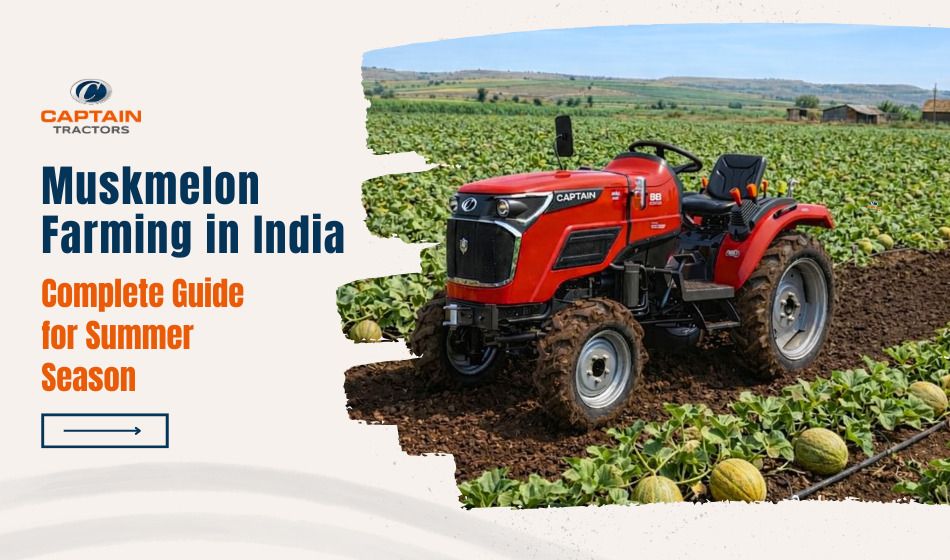
Muskmelon Farming in India: Complete Guide for Summer Season
Muskmelon farming provides Indian farmers a great opportunity to earn a good profit in the summer months. The sweet and juicy fruit is a great crop in hot weather and is an extremely high demand in the market in rural and urban regions. Farmers who use the right cultivation techniques can get good yields and a regular income from the muskmelon crop.
Cultivation requires careful plan, good seeds, appropriate equipment and timely care. Modern farming methods as well as the usage of mini tractors equipped with the appropriate tractor equipment help make the whole process easier and less labor-intensive. This guide will teach you all you should know about how to grow Muskmelon successfully within Indian conditions.
Benefits of Muskmelon Farming for Indian Farmers
Muskmelon cultivation gives several advantages which make it an attractive choice for farmers:
- Short duration of the crop: It matures in between 90 to 100 days, which permits farmers to plan multiple crops in cycles.
- Low water requirement: Muskmelon needs less water when compared to other summer crops
- High nutritional value: Fruits are rich in minerals and vitamins and creates constant demand for the product
- Multiple market channels: Farmers may direct sell to wholesalers, local market vendors or food processing facilities.
- Flexible land use: The crop that can grow well on marginal land that might not work with other crops
- Good storage quality: Fruits that have been properly harvested are able to be kept for long time
Ideal Climate and Soil Conditions
Muskmelon thrives in warm, dry conditions with plenty of sunshine. The ideal growing temperature is 25°C to 35°C. It needs humid, hot days as well as cool nights for prope growth of fruit as well as its sweet taste.
Climate Requirements:
- Warm temperatures throughout the growing period
- Low humidity to prevent fungal diseases
- Require very litttle rainfall during flowering and fruiting stages
- Good exposure to sunlight for at least 6-8 hours per day
Soil Preferences:
The sandy and loam types of soil are perfect for the cultivation of muskmelon. The soil should have sufficient drainage as waterlogging may affect the roots and lower yields. A pH of 6.0 and 7.0 is the ideal pH to ensure the optimal supply of nutrients.
Avoid soils made of clay which hold too much water. The land must be well-drained and full of organic matter. Zones with a slight elevation or gentle slopes can aid with natural drainage, and also prevent the accumulation of water around plant roots.
Land Preparation
Proper preparation of the land is the foundation for the successful cultivation of muskmelon. It is the first thing to do clearing the field of crops, weeds, or other remnants. This helps to prevent the spread of pests from previous crops, and will ensure healthy conditions for growth.
Step-by-Step Preparation:
- The field should be plowed thoroughly to break up the hard soil layers and increase the aeration
- Perform 2 to 3 rounds of harrowing to create fine soil texture
- Level the field using a land leveler to ensure uniform water distribution
- Include well-decomposed farmyard manure, or compost in the range of 15-20 tons per hectare
- Combine the soil organic material completely into the top layer of soil
- Create bed ridges or raised beds to allow drainage and avoid the logging of water
A mini tractor fitted with appropriate attachments makes the process of preparing land faster plus more productive. High-quality preparations reduce the cost of manual labor and provides perfect conditions for the germination of seeds and root development.
Seed Selection and Sowing Method
The choice of the best seeds will determine the quality of your muskmelon harvest. Select varieties that are appropriate to the local climate, and that have a good resistance. Hybrid varieties usually have better yields and consistency compared to traditional varieties.
Seed Selection Tips:
- Purchase certified seeds from authorized dealers
- Choose varieties with proven performance in your region
- Check seed germination rate before sowing
- Prefer varieties with good market acceptance
Sowing Process:
Seeds should be sown directly in the prepared field. Create little pits and furrows with suitable spacing. The ideal spacing should be 1.5 to 2 meters between rows, and 0.5 up to 0.75 metres between the plants in rows.
Sow 2 to 3 seeds per pit, spaced over 3 to 4 centimeters. Once germination has taken place, you can thin the seedlings so that you can ensure that only the strongest plants remain within each pit. This ensures optimal plant density, and stops overcrowding that could impact the size and quality of fruit.
The ideal time to plant is between February and March across most regions of India. In areas in the south with favorable conditions, farmers can cultivate muskmelon in the months of October through November.
Irrigation Management
Muskmelon requires a careful approach to managing water during its growth cycle. Although the plant is resistant to drought, the continuous supply of water in crucial stages will guarantee good fruit development and sweet taste.
Irrigation Schedule:
- Water immediately after sowing to promote germination
- Provide light, frequent irrigation during the initial growth phase
- Increase the amount of water used during the flowering and making stages
- Reduce the amount of irrigation when the fruits are near maturity to increase the sweetness
- Stop watering 7-10 days prior to harvest
Drip irrigation is ideal for the cultivation of muskmelon because it directs the flow of water towards the plant's root zones. It reduces water loss and reduces the amount of foliage wetness that could cause disease. If drip irrigation systems aren't accessible, farmers can opt for furrow irrigation to ensure that water doesn't touch fruit or plant stems directly.
Overwatering can lead to root cracking and lower sugar levels in fruits. Check soil moisture frequently and adjust irrigation according to conditions in the weather and plant needs.
Machinery That Makes Muskmelon Farming Efficient
The correct tractor equipment increases the efficiency of farming and lowers operating costs. For the cultivation of muskmelon in small-sized to medium-sized farms, a mini tractor of 20-30 HP can be used with ease.
Key Tractor Features Needed:
- Compact size for easy maneuverability in smaller fields
- Adequate power for pulling various implements
- Good fuel efficiency to minimize operational costs
- Reliable performance in warm summer conditions
- Easy attachment system for different implements
Farmers must select tractors from trusted tractor manufacturers in India with excellent after-sales services and spare part availability. An efficient mini-tractor has numerous purposes, beyond the muskmelon farm and is a great investment for the entire farm operation.
A tractor provides invaluable help when it comes to land preparation, bed formation and inter-cultivation - as well as transporting harvested crops - making them suitable for all-year round use with increased returns on investment.
Essential Implements Needed
Installing the appropriate tractor implements ensures efficient farming operations at every stage. Here are the essential tools required for growing muskmelons:
- Cultivators are specifically designed to break the soil and remove plants that are weedy between rows of crop.
- Rotavator: To create fine soil texture and mix organic material.
- Disk Harrows Ideal to break up Clods and forming smooth seedbeds
- Ridger creates raised beds or ridges that can be used for planting.
- Leveler: Ensures uniform field surface for even water distribution
- Trailer or Cart: Transports harvest, manure, and other materials
Quality implements reduce manual labor requirements and complete tasks faster than traditional methods. They also ensure uniform work quality, which directly impacts crop performance and yields. For comprehensive guidance on selecting farming equipment, check out this resource on best tractor and implements for crop sowing and land preparation.
Pest and Disease Control
The prevention of crop damage from pests and disease is critical in order to secure both high quality and high quantity crop output. Additionally, frequent assessments of the field assists in the identification of problems in their early stages, wherein controlling actions can be the most effective.
Common Pests:
- Fruit flies: Use pheromone traps and remove affected fruits
- Aphids: Spray neem-based insecticides or use biological control
- Red pumpkin beetles: Hand-pick adults and use recommended insecticides
- Leaf miners: Remove affected leaves and use appropriate sprays
Integrating pest control using biological, cultural and chemical methods yields the best results. Maintain hygienic conditions in the field by removing plant parts that are infected, practicing crop rotation, and stay clear of over-nutrition that could cause plants to be more vulnerable to pests.
Harvesting and Yield
Muskmelon fruit matures in 90-100 days following the seeds are sown. A proper timing for harvesting is vital to ensure the quality of the fruit, its taste and value to the market. Also, harvesting too soon can result in a loss of sweetness and a delay in harvesting reduces the shelf time.
Maturity Indicators:
- Color change in the skin from green to yellow or cream
- Easy separation of fruit from stem with gentle pressure
- Development of characteristic sweet aroma
- Slight softening of the blossom end
- Drying of tendrils near the fruit
Fruits are harvested earlier in the day, when temperatures are cool. Be careful when handling fruits to avoid bruises and damages. Make use of sharp pruning shears or knives to cut off the stem and leave a tiny piece of the fruit.
Conclusion
Muskmelon farming is a profitable possibility for Indian farmers in the summer time. The crop is a moderate investment, is well-suited with good practices for management and provides attractive returns within an extremely short period of time. Modern equipment such as mini tractors, and the right implements can make cultivation more efficient and less labor-intensive.
It's all about picking the most suitable varieties, making sure you have adequate nutrition, as well as adequate irrigation. It is also about protecting the crops from pests and diseases. With careful planning and execution farming, farmers can earn a steady income cultivating muskmelon, while also satisfying the increasing consumer demand seeking fresh, healthy foods.
Loading...